

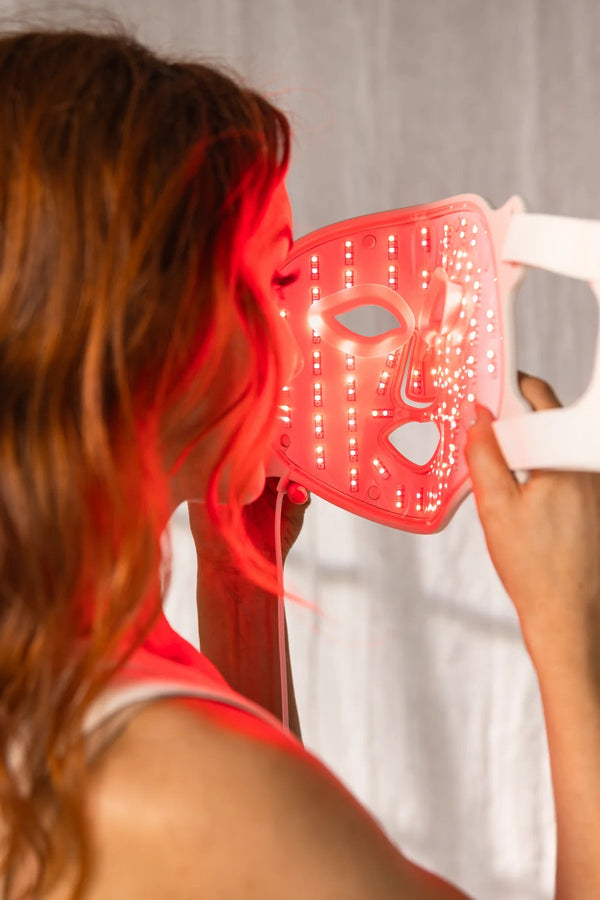



Infrared heat and light therapy are entering the conversation about the future of medicine.
At last!
At the intersection of well-being, technology and biology, a new view of health is emerging. What was once seen as luxury and lifestyle is now being examined with scientific seriousness.
In recent years, infrared sauna and red light therapy have become regular features of well-being, recovery and longevity. Now researchers are turning their attention to something more fundamental: can heat and light influence the biological mechanisms behind some of the most widespread health challenges of our time?
A comprehensive scientific review article from 2025 points in that direction. It describes growing interest in infrared heat and related light therapies, particularly in relation to metabolic diseases such as insulin resistance and type 2 diabetes: conditions that often occur alongside overweight, unfavourable blood lipid levels, fatty liver and an increased risk of cardiovascular disease.
These diseases are growing rapidly worldwide and place a considerable burden on both individuals and healthcare systems. At the same time, we know that established medical treatments are often costly and can cause side effects. The need for safe, accessible supplements is greater than ever.
And this is where infrared heat and light come in.
Cells get better working conditions
The review article focuses in particular on far-infrared light therapy (FIR), also known as infrared heat treatment, and how it affects key biological processes: blood vessel function, oxidative stress, immune response and the mitochondria's energy production, the very foundation of metabolic health.
The therapy is also linked to favourable effects on blood pressure and lipid metabolism, the body's handling of fats, which are factors that matter for cardiovascular health.
What is most interesting is not that infrared heat affects the body positively. What is new is the link to the underlying disease processes: how heat and light can interact directly with cells and support the body's own regulatory systems.

When blood vessels come to life
On the inside of every blood vessel is a very thin but crucial layer of cells: the endothelium. It regulates the elasticity of blood vessels, blood pressure and the transport of oxygen and nutrients.
Impaired endothelial function is an early sign of insulin resistance, diabetes and cardiovascular disease. When this system fails, the body's ability to regulate energy efficiently is also weakened.
Research suggests that far-infrared heat may stimulate the endothelium at several levels. Blood vessels relax, circulation and microcirculation improve, and blood flow to the skin and tissues increases. At the same time, heat may influence signalling pathways involved in the repair and adaptation of blood vessels, including processes where VEGF (a signalling protein important for blood vessel adaptation) plays a role.
The result can be summarised as:
- Better circulation
- More flexible blood vessels
- Support for the body's natural metabolic regulation
Energy, right down at cell level
Metabolic health starts in the cells. This is where we find the mitochondria, the body's own power plants, where energy is produced.
Stress, a sedentary lifestyle and ageing can weaken mitochondrial function. When energy production falls and oxidative stress rises, the strain on the cells increases and the body's resilience is weakened.
Infrared heat and red light therapy may support the mitochondria directly. Studies suggest increased production of ATP, the cells' energy molecule, and more robust energy processes over time. Researchers describe this as small, controlled stimuli that activate repair mechanisms and strengthen the efficiency of the cells.
This may be experienced as:
- More energy
- Better insulin response
- Better metabolic flexibility

Inflammation: from constant alarm to balance
Many metabolic diseases share a common denominator: chronic, low-grade inflammation, a silent state of inflammation in which the immune system is on constant alert.
This drains the body of energy and disrupts normal metabolic regulation. Research suggests that infrared heat may help to dampen this "background fire", while the immune response becomes more precise and balanced. When the immune system works smarter, resources are freed up for repair and stabilisation.
A more flexible metabolism
When blood vessels become more elastic, the mitochondria more efficient and inflammation is dampened, something crucial happens:
The metabolism becomes more flexible.
Cells take up energy more easily.
The body regulates glucose and fat better.
Processes that drive disease lose strength.
It is this holistic effect that makes infrared heat and red light so interesting, not just for researchers, but for anyone who wants to invest in long-term health.
Luxury that truly matters
At a time when lifestyle diseases are increasing faster than the capacity of healthcare systems, infrared heat no longer appears to be just about well-being, but as a potential health partner.
Researchers emphasise that this is not about replacing medical treatment, but about supplementing it with solutions that support the body's own regulatory systems:
Better circulation.
More efficient energy production.
Lower inflammatory burden.
Increased cellular robustness.
Perhaps the health solutions of the future are no more complicated than necessary. Further clinical studies are needed, but part of the answer may lie in nature's own signals:
Heat.
Light.
Biology.
The development points towards a possible paradigm shift, from well-being to medicine.
Not as a quick fix, but as a way to prevent, maintain and support the body's balance over time.
That is luxury that truly matters.
Disclaimer: The content of this article is intended as general information only. Research into infrared heat and red light therapy is still evolving, and individual results may vary. Our products are not intended to diagnose, treat, cure or prevent disease. Contact a doctor or other qualified healthcare professional if you have questions about your own health, diagnosis or treatment.


